Planche 371 · Zingiberales · Zingiberaceae
Zingiber officinale
Noms communs : Gingembre, Gingembre officinal, Démon de minuit, Cooking Ginger
BretonjinjebrCatalangingebreAllemandIngwerAnglaisgingerBasqueJengibreNéerlandaisgemberOccitanGengibrePortugaisgengibre
- Règne
- Plantae
- Division
- Tracheophyta
- Classe
- Liliopsida
- Ordre
- Zingiberales
- Famille
- Zingiberaceae
- Genre
- Zingiber
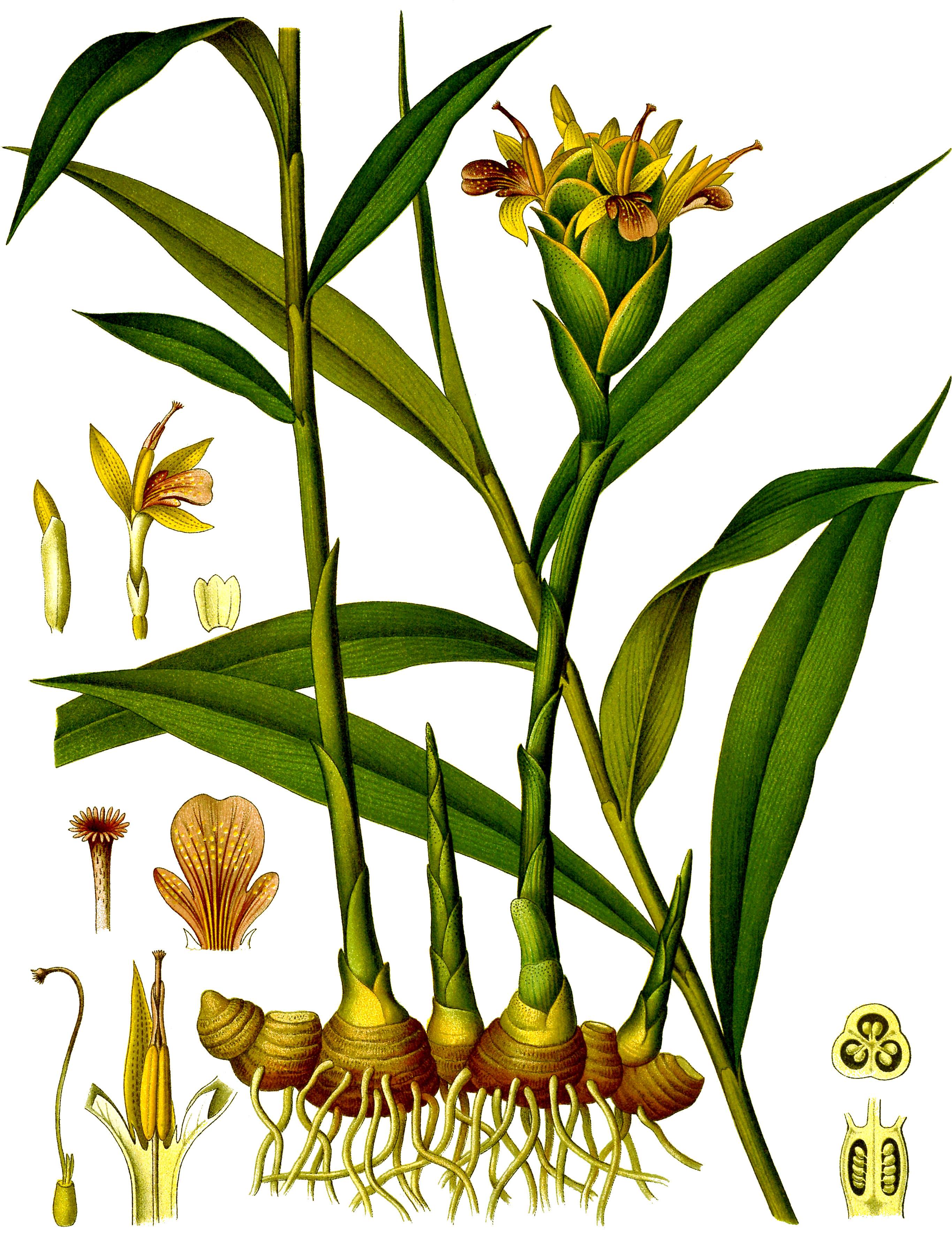
I. Description & Savoir-faire
Cette fiche est en cours de mise à jour pour se conformer à nos sources de données. Merci de repasser prochainement.
- Hauteur moyenne
- 75 cm
- Surface d'une feuille
- 59 cm²
Sources Díaz et al. 2022, TRY File Archive (doi:10.17871/TRY.81) · CC BY 4.0
II. Une année
Les cases pleines marquent le cœur de chaque période. Dates indicatives pour la France, qui varient avec l'altitude et le climat. Les lignes « Observée » et « Fructification » viennent des dates des observations GBIF : la période regroupe 90 % des observations, le moment fort la moitié. Les saisons sont inversées entre les deux hémisphères.
Sources Wikipédia, « Gingembre » · CC BY-SA 4.0 · GBIF · CC BY 4.0 — texte adapté, partagé sous la même licence
III. Répartition & Habitat
Observations GBIF sous licence CC0 ou CC BY, regroupées par zones de 50 km550 km puis arrondies : les contours sont approximatifs.
Dans le monde
Sources GBIF · CC BY 4.0 · Wikipédia, « Gingembre » · CC BY-SA 4.0 — texte adapté, partagé sous la même licence
IV. La reconnaître
Ne pas confondre
Le gingembre japonais est davantage utilisé dans les cuisines japonaise et coréenne.
L'Asaret est une espèce différente, appartenant à la famille des Aristolochiaceae, et est toxique.
ToxiqueSources Wikipédia, « Gingembre » · CC BY-SA 4.0 — texte adapté, partagé sous la même licence
V. Savoir-faire
Observation du gingembre officinal
Le gingembre officinal est une plante herbacée vivace d'environ 0,90 m à 1 m de haut. Il apprécie une exposition ensoleillée et une atmosphère humide. La croissance est rapide et la multiplication se fait par division des rhizomes.
Période de floraison
La floraison du gingembre officinal a lieu généralement en été, de juin à août. Il est donc possible de l'observer pendant cette période.
Sources Wikipédia, « Gingembre » · CC BY-SA 4.0 — texte adapté, partagé sous la même licence
VI. Précautions & Informations
Consulter un professionnel de santé avant tout usage thérapeutique.
Assurez-vous de l'identification correcte de l'espèce avant toute utilisation.
VII. Le saviez-vous ?
Selon les textes médicinaux anciens, le gingembre était utilisé pour traiter diverses affections, allant de l'asthme aux hémorroïdes.
Sources Wikipédia, « Gingembre » · CC BY-SA 4.0 — texte adapté, partagé sous la même licence